Author
Spain, Madrid
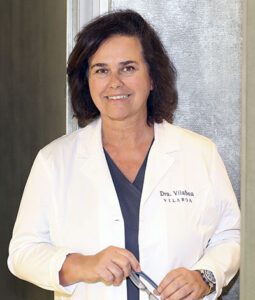
Dr Beatriz R. Vilaboa received her degree in medicine and surgery with honours from the Complutense University of Madrid from which she also attained her specialty in stomatology. She joined Clinica Vilaboa in Madrid soon after her sister Dr Debora R. Vilboa founded it in 1987. She enjoys her private practice at the Vilaboa Clinic, dedicated to esthetic and restorative dentistry.Her devotion to treating patients using the most conservative approach possible motivated her to embrace the adhesive-additive concept to provide solutions to the tooth wear patient. Her interest in tooth wear culminated with a PhD from San Pablo CEU University Faculty of Medicine in Madrid, where she is now Co-Director of the undergraduate Esthetic Dentistry department. Dr Beatriz Vilboa’s passion for teaching is also evident in the many courses that she and her sister have given over the last 30 years. Dr. Beatriz Vilaboa has the honour of being an active member of the European Academy of Esthetic Dentistry (EAED) and the Italian Academy of Esthetic Dentistry (IAED). She is also founding member of the International Academy of Adhesion (IAA). Her desire to better help patients suffering from cancer and other major medical conditions pushed her to become a member of the American Academy of Oral Medicine (AAOM). She is also a member of the Spanish Society of Stomatological Prosthetics (SEPES) and Spanish Society of Periodontology (SEPA), as well as a fellow member of the International College of Dentists (ICD) and an academic from the Pierre Fauchard Academy. She lectures worldwide on esthetic and restorative dentistry and especially on tooth wear. Dr Beatriz Vilaboa treasures friendship with colleagues worldwide and believes that the common passion for dentistry goes beyond borders.
Author
Spain, Madrid
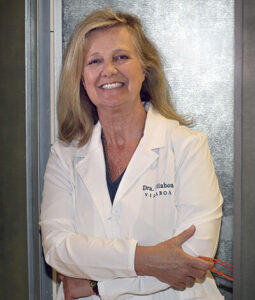
Dr Debora R. Vilaboa graduated from the Complutense University Faculty of Medicine and Surgery in Madrid. The same year, she was accepted at the Seville School of Dentistry, where she obtained her dental degree. Later on she chose to attend the Advanced Pediactric Dentistry Program at the University of Southern California in Los Angeles. After establishing the Vilaboa Clinic in 1987, she found that some cases could not be explained by caries nor periodontal disease and began gathering data. She lectured on tooth wear as early as 1992, both in Spain and the United States. Understanding how to approach the treatment of young children helped Dr Deborah Vilaboa in her work with tooth wear patients, many of whom had a fear of dentistry. As a pioneer in the field of porcelain laminate veneers, she treated such cases with a novel adhesive concept. Dr Debora Vilaboa soon became a member of the Spanish Society of Stomatological Prosthetics (SEPES) and the Spanish Society of Periodontology (SEPA). Her passion for treating patients and continuing education was rewarded in becoming an active member of the European Academy of Esthetic Dentistry (EAED). She was then able to pursue her restorative and prosthodontic interests, thanks to a truly collaborative and generous exchange of knowledge among the active members that is still a driving force for the team at Vilaboa Clinic. She is also an active member of the Italian Academy of Esthetic Dentistry (IAED). Dr Debora Vilaboa was invited by the San Pablo CEU University to create an undergraduate Esthetic Dentistry Department that she co-directs with her sister, Dr Beatriz Vilaboa. She lectures worldwide in esthetic dentistry, with a focus on tooth wear. She was a contributor to Esthetics in Dentistry (Quintessence, 2016). Given her medical background, Dr Deboarh Vilaboa is devoted to understanding and treating conditions arising from medical and oral imbalances, and through her research, she has obtained several patents related to her work. She is an active member of the American Academy of Oral Medicine (AAOM), a fellow member of the International College of Dentists (ICD), and an academic at the Pierre Fauchard Academy.
Author
Spain, Madrid
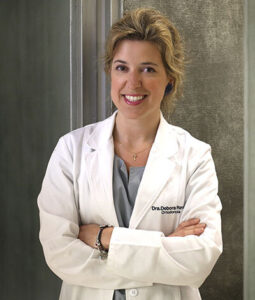
Dr Debora Reuss obtained her Master’s Degree in Orthodontics at the European University of Madrid, 4 years after graduating as a dentist from San Pablo CEU University of Madrid. Having completed several postgraduate specialty courses (including Damon self-ligating and Invisalign systems), she joined the Spanish Orthodontics Society (SEDO) and the Spanish Society of Aligners (SEDA). As a Member of the American Association of Orthodontics (AAO), she is a firm believer in facial- and profile-guided orthodontics. Dr Reuss trained in occlusion at the Pankey Institute of Miami and believes that a classical concept of occlusion must be a driving force in treating orthodontic patients. Her passion for treating patients within a multidisciplinary approach has inspired her to attend continuing education courses on occlusion, restorative, and prosthodontic topics and is the reason behind her affiliation with the Spanish Society of Stomatological Prosthetics (SEPES) as well as the reason why she became affiliate member of the European Academy of Esthetic Dentistry (EAED) and the Italian Academy of Esthetic Dentistry (IAED). Dr Reuss teaches at the Esthetic Dentistry Department at San Pablo CEU University of Madrid. Multidisciplinary thinking led her to join the Vilaboa Team in Madrid to help treat tooth wear patients with a minimally invasive philosophy to prevent further wear and to ensure conservative performance of the required restorations. An education in three-dimensional thinking as an orthodontist is key in leading the tooth wear team to a facially guided restoration as an architect of the oral complex.
Author
Spain, Madrid
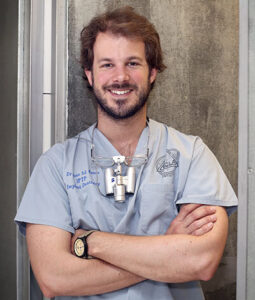
Dr Jose Manuel Reuss graduated in dentistry from the University Complutense of Madrid, where he also obtained a Master´s Degree of Science. As a postgraduate in surgical implant dentistry at the University of California at Los Angeles, he was a recipient of a grant from the American Academy of Implant Dentistry for preclinical and clinical research. During his postgraduate research, he focused on bone regeneration with growth factor technologies. Dr Jose Manual Reuss’s clinical background both in implant surgery and prosthodontics has led him to develop a facially guided restoration concept. In particular, severe tooth wear or highly dysfunctional cases can benefit from the combination of digital protocols and a more traditional classical workflow. His current clinical and research foci relie on the integration of facial scanners into guided surgery systems, restorative protocols, and clinician-technician communication. As an affiliate member of the European Academy of Esthetics Dentistry, he is an enthusiast of multidisciplinary thinking and is therefore also a member of the Spanish Society of Prosthodontics (SEPES), the Spanish Society of Periodontics (SEPA), the Academy of Osseointegration (AO), and the European Academy of Osseointegration (EAO). Dr Jose Manuel Reuss is a Collaborating Professor in the Postgraduate Prosthodontics Department in the field of implant and restorative dentistry at the University Complutense of Madrid, the University of Leon, and at the Esthetic Dentistry Department at the University San Pablo CEU of Madrid. His current focus of research is digital implant dentistry and severe tooth wear with the aim to optimize diagnostic and treatment phases and engage the working team in research. His goal to simplify the communication between the team members of an integrated multifaceted treatment plan challenges Dr Reuss almost as much as his passion for sports in his personal life.